

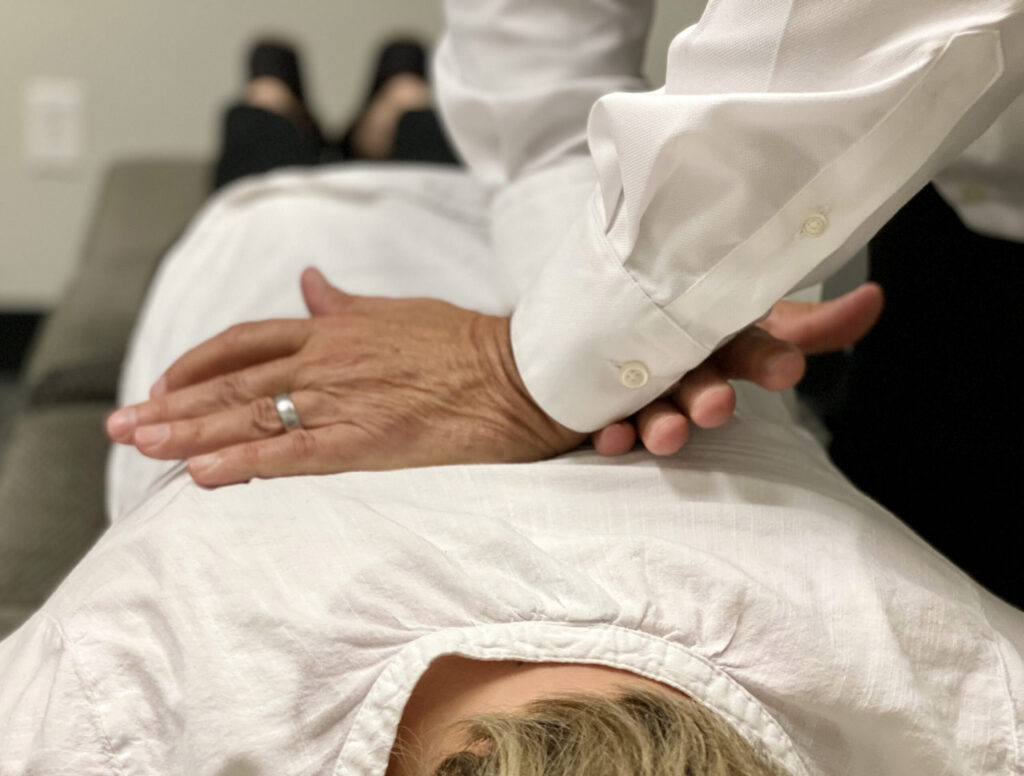
Summary: Chiropractic care looks at spinal structure, movement, and function alongside a patient’s symptoms and health goals. At Chiropractic First, spinal corrective care uses detailed examinations, spinal X-rays, and specific adjustments to address current concerns while also supporting mobility, performance, and long-term spinal health.
Key Takeaways:
- A chiropractor evaluates spinal function, health history, posture, movement, symptoms, and personal health goals.
- At Chiropractic First, spinal X-rays are taken before care begins so recommendations are based on objective structural findings.
- Care uses gentle, precise, specific spinal adjustments, usually performed by hand, to help restore more normal spinal function.
- Spinal corrective care looks beyond short-term symptom relief and places greater attention on spinal structure and long-term function.
- You do not need to be in pain to see a chiropractor. Some patients seek care to support mobility, physical performance, posture, and long-term wellness.
Each year, an estimated 35 million people in the U.S. visit chiropractors. Many first walk through the door because of back pain, neck stiffness, headaches, an injury, or limited mobility. Others feel perfectly fine but want to know how well their spine is.
Chiropractic care works with your body’s natural ability to heal by getting to the root of the problem. Usually, it comes down to how your spine and musculoskeletal system are aligned and functioning.
Still, even with how popular it’s become, plenty of first-time patients aren’t totally sure what a chiropractor does. The uncertainty is one of the biggest reasons people delay seeking care, which could genuinely help them feel and move better.
If you’re a Campbell resident considering chiropractic care for the first time, understanding what it involves can help you make a confident, informed decision. In this guide, we explain what chiropractors do, the conditions they address, what to expect at your first visit, and how care is customized to each patient.
What Is Chiropractic Care and What Does a Chiropractor Do?
Chiropractic care in Campbell, CA is a hands-on form of care centered on the spine, nervous system, joints, and how the body functions as a whole. Chiropractors assess spinal movement and structure, identify areas that may not be functioning normally, and develop care based on the patient’s findings and goals.
Your spine protects your nervous system and plays a central role in nearly every movement you make. When joints in the spine lose their normal position or movement, nearby nerves and muscles can become irritated. The irritation may show up as pain, stiffness, or reduced mobility.
A top chiropractor looks at how these parts work together instead of treating one spot in isolation.
Before any treatment, a chiropractor evaluates each patient’s history, posture, movement, examination findings, and spinal X-rays. With this picture in mind, they create a care plan around your specific needs and goals. The care plan can then address current concerns while also considering longer-term spinal function, mobility, performance, and wellness.
Why Someone Might Visit a Chiropractor
People come to chiropractors for many reasons, including:
- Pain or stiffness in the back, neck, or joints
- Mobility concerns, such as difficulty turning, bending, or moving freely
- Injury recovery from accidents, sports, or physical strain
- Posture-related discomfort from long hours at a desk or on a phone
- General wellness goals, like staying active, preventing future problems, and feeling your best
You don’t have to be in severe pain to benefit. Some patients seek care simply to move better and maintain their health.
| Who This Affects Most: People who spend long hours sitting, repeat the same physical movements, participate in sports, or are recovering from an injury may have particular reasons to ask whether a musculoskeletal evaluation could help address pain or movement limitations. |
What Happens When You Visit a Chiropractor?
Your first visit starts with gathering detailed information about your health, lifestyle, previous injuries, current concerns, and what you want from care.
Next comes a one-on-one consultation and examination. Your chiropractor may assess posture, spinal movement, range of motion, and orthopedic or neurological findings.
At Chiropractic First, spinal X-rays are also taken before care begins.
These images give the doctor objective information about spinal structure, alignment, curves, signs of previous injury, and other findings relevant to your care. Rather than guessing based on symptoms alone, the doctor can see more clearly what may need attention.
After reviewing the examination and X-rays, your chiropractor explains the findings, answers your questions, and discusses the recommended corrective plan.
You should know what was found, why care is being recommended, and what the doctor hopes to improve before moving forward.
| How it works: Your first visits generally follow a clear sequence: health history and goals → consultation → examination → spinal X-rays → review of findings → personalized care recommendations. |
Will You Get an Adjustment on Your First Visit?
At Chiropractic First, the priority is first gathering the information needed to make an informed recommendation. Because spinal X-rays are taken before care begins, the doctor can review your spinal structure before deciding where and how to adjust.
Once the findings have been reviewed and your care plan has been discussed, treatment can move forward based on your specific needs.
| Common Mistake: A common misconception is that every first chiropractic appointment should end with an adjustment. In practice, the examination and clinical findings should determine whether treatment is appropriate that day. |
Conditions and Concerns Chiropractic Care May Address
Chiropractic care can help with a wide range of musculoskeletal issues, including:
- Back pain
- Neck pain
- Sciatica
- Herniated discs
- Knee, hip, and leg pain
- Stiff back and muscle spasms
- Whiplash and auto injuries
- Sports-related injuries
- Posture and mobility concerns
Don’t count yourself out if your concern isn’t on this list, though. A consultation is the best way to find out whether chiropractic care is a good fit for your situation.
Care for Different Types of Patients
At Chiropractic First, care can support patients at different ages, activity levels, and stages of life:
- Prenatal chiropractic care supports women through the physical and postural changes of pregnancy.
- Pediatric chiropractic care uses gentle, age-appropriate techniques for children.
- Athlete-focused care can support mobility, movement, recovery, and physical performance.
- Auto-injury care evaluates spinal and soft-tissue changes following a collision.
- Wellness-minded care gives patients without current pain an opportunity to evaluate spinal structure and function.
Not every patient walks in with the same goal.
Some want relief from a current problem. Others want better movement or performance. Some simply want to take a closer look at their spinal health before pain becomes the reason they seek care.
Chiropractic Techniques and Additional Treatment Options
Chiropractic care is a set of proven techniques your chiropractor selects and combines based on what your body needs. Below is a closer look at the options that may form part of your plan, and the role each one plays.
Chiropractic Adjustments
Every effective plan starts with restoring proper motion. Chiropractic adjustments are precise, controlled movements that free up restricted joints and correct misalignments. When a joint moves the way it should, the surrounding nerves and muscles are no longer under constant strain. It’s usually the first step toward meaningful, lasting relief.
Spinal Decompression
Some concerns, such as herniated discs and sciatica, stem from too much pressure in the spine. Spinal decompression gently eases this pressure by creating space between the vertebrae and giving compressed discs room to recover.
| Watch Out: Do not assume that disc-related pain or sciatica automatically means spinal decompression is the right treatment. These conditions can have different causes and levels of severity, so the appropriate approach should follow an individual assessment. |
Soft Tissue Therapy
Joints and muscles work as a team. Soft tissue therapy targets the muscles, tendons, and connective tissue around your spine and joints. By releasing built-up tension and improving circulation, it helps your body hold its adjustments longer and heal more comfortably.
Rehabilitative Exercises
Rehabilitative exercises are designed to strengthen weak areas, correct imbalances, and stabilize the muscles in your spine. Over time, this turns short-term relief into long-term resilience, so the same issues are far less likely to resurface.
Postural and Lifestyle Guidance
Even the best treatment can be undone by daily habits. Chiropractors offer practical postural and lifestyle guidance, such as making simple, actionable adjustments to how you sit, stand, sleep, and move. These small changes protect the progress you’ve worked toward and keep your recovery on track.
| Tip: Ask which one or two daily habits are most important to change first. Small, specific adjustments are usually easier to follow than a long list of lifestyle changes. |
HEIT Therapy and Nutritional Support
When it suits your condition, additional therapies can accelerate and reinforce your results. HEIT Therapy may be introduced to support healing where relevant. Nutritional support can also complement your overall care by helping reduce inflammation and giving your body the resources it needs to repair.
Because every body is different, these therapies are never applied by default. Your chiropractor will assess your condition, listen to your goals, and recommend the specific combination that gives you the best possible outcome.
Why Treatment May Look Different for Each Patient
No two care plans are identical. Several factors influence the approach:
- The condition and symptoms presented
- The patient’s age and lifestyle
- The patient’s injury history
- The patient’s treatment goals
- The results of the individual assessment
A young athlete and a retiree with chronic stiffness will follow different paths, even for similar complaints.
Potential Benefits of Chiropractic Care
Pain relief may be what first brings someone to a chiropractor, but it does not have to define the entire purpose of care.
Spinal corrective care also looks at how well the spine moves and functions over time. Depending on the patient, goals may include maintaining mobility, supporting posture, improving physical function, addressing structural findings, or staying active without waiting for pain to become the deciding factor.
Pain Management
By addressing the mechanical source of discomfort, chiropractic care can help reduce pain naturally, without relying solely on medication.
Mobility and Range of Motion
Restoring proper joint function typically makes everyday movements feel easier and less restricted.
Spinal Health
Spinal corrective care looks at the structure and function of the spine rather than judging spinal health by symptoms alone.
Some changes can exist without noticeable pain. Examination findings and X-rays give the chiropractor more information about how the spine is positioned and functioning.
Posture
Adjustments and guidance can help correct imbalances that contribute to poor posture and related strain.
Supporting Physical Function
When your joints and nervous system work well together, your body is better equipped to perform daily activities comfortably.
Long-Term Wellness
Beyond treating existing concerns, ongoing care can help with:
- Staying mobile
- Supporting physical performance
- Maintaining better spinal function
- Keeping a closer eye on structural changes over time
For active and wellness-minded patients, spinal corrective care provides another way to be proactive about their health rather than waiting until pain limits work, exercise, sports, or everyday movement.
Some structural changes may exist before they cause noticeable pain. Over time, unaddressed mechanical stress may contribute to reduced mobility, recurring strains or sprains, disc-related concerns, or degenerative changes. Evaluating spinal structure earlier gives patients more information before symptoms become their first warning sign.
What Can Affect Your Progress?
No two recovery journeys look exactly alike. Several factors can influence how quickly you notice results and how well those results last.
- The type and duration of your concern
- Your individual health factors
- Your consistency with treatment
- How well you follow recommended exercises or lifestyle changes
- Regular reassessment to keep your plan on track
Chiropractic care works best as a partnership. Your commitment is just as important as the care you receive.
Is Chiropractic Care Appropriate for You?
The best way to know is through an individual assessment. A good chiropractor will take the time to understand your personal treatment goals and be honest about what care can and can’t do.
Sometimes, additional medical evaluation may be appropriate, and a reputable practice will tell you when that’s the case. It’s also important to discuss any existing health conditions or injuries upfront.
Above all, chiropractic care is about setting realistic expectations. Clear communication leads to better outcomes.
Take the First Step Toward Better Spinal Health
Understanding what a chiropractor does is the first step. Finding the right one is the next. If you’re dealing with pain, recovering from an injury, or simply want to support your long-term spinal health, chiropractic care may be worth exploring.
| Bottom Line: The best chiropractic experience starts with a clear assessment, realistic expectations, and a treatment plan you understand. If the recommended care does not make sense to you, ask questions before agreeing to proceed. |
At Chiropractic First in Campbell, CA, care starts with listening to you and building a plan around your unique needs. Ready to learn more? Reach out to schedule your consultation and discover what personalized chiropractic care can do for you.
Frequently Asked Questions (FAQs)
1. Is chiropractic care safe?
- For most people, chiropractic care is a safe, non-invasive option when performed by a licensed professional. Your chiropractor will review your health history and examination findings to make sure your care is appropriate for you.
2. How much does a chiropractor cost in Campbell, CA?
- Costs vary depending on your specific treatment plan, the services involved, and your insurance coverage. The best approach is to ask directly during your consultation, so you know what to expect.
3. How many chiropractic sessions will I need?
- There is no standard number of visits for every patient. Your recommended care depends on your examination, spinal X-rays, structural findings, health history, and goals. Chiropractic First reviews progress over time and bases ongoing recommendations on how you respond to care.
4. Does a chiropractic adjustment hurt?
- Chiropractic First uses gentle, precise, specific spinal adjustments, usually performed by hand. Most patients tolerate adjustments comfortably, although experiences vary. Your chiropractor can explain the technique being used and answer any questions before care begins.
5. Can a chiropractor help with sciatica and herniated discs?
- Yes. Chiropractic care, including spinal decompression and adjustments, is a common non-surgical approach for sciatica and disc-related pain. Your treatment plan will be based on your individual assessment.
6. Should I see a chiropractor after a car accident?
- It’s often a smart idea. Auto injuries like whiplash aren’t always obvious right away, and early evaluation can help address soft-tissue damage before it becomes a bigger problem.
7. Do I need to be in pain to see a chiropractor?
- No. Some patients visit a chiropractor because of pain or an injury, while others want to support spinal function, posture, mobility, physical performance, or long-term wellness. Chiropractic First also evaluates patients who may not currently have noticeable symptoms.
8. What is spinal corrective chiropractic care?
- Spinal corrective care looks beyond short-term symptom relief and pays closer attention to spinal structure and function. At Chiropractic First, examinations and spinal X-rays guide gentle, precise, specific adjustments based on each patient’s findings and longer-term health goals.